Viking raids from 793-1066 didn’t just pillage; they seeded Old Norse words into English’s core, contributing up to 5,000 terms that shape everyday speech ...
Old English, a Germanic fortress of inflections and runes, crumbled under Norman French siege after 1066, birthing Middle English—a flexible hybrid blending Anglo-Saxon grit ...
English served as the British Empire’s linguistic weapon, imposed through administration, education, and trade to unify diverse colonies from India to Africa, cementing control ...
The Industrial Revolution turbocharged English, birthing technical vocab, standardizing forms, and spreading a unified dialect from London’s factories to global trade. Steam engines, mills, ...
Latin and Greek profoundly shaped English vocabulary, contributing 29% and 6-12% respectively, especially in science, law, medicine, and philosophy, via direct borrowings, roots, and ...
Early Modern English emerged around 1500, bridging Middle English dialects to today’s flexible tongue during Shakespeare’s lifetime (1564-1616), fueled by Renaissance humanism, printing, and ...
English rose from Anglo-Saxon dialects spoken by 5th-century invaders to a global lingua franca with 1.5 billion users, shaped by invasions, trade, and empire. ...
The evolution of Old English spans approximately from the mid-5th century to the Norman Conquest in 1066, marking a foundational chapter in the development ...
The Norman Conquest of 1066 profoundly transformed English by infusing it with thousands of French words, simplifying grammar, and altering pronunciation, shifting Old English’s ...
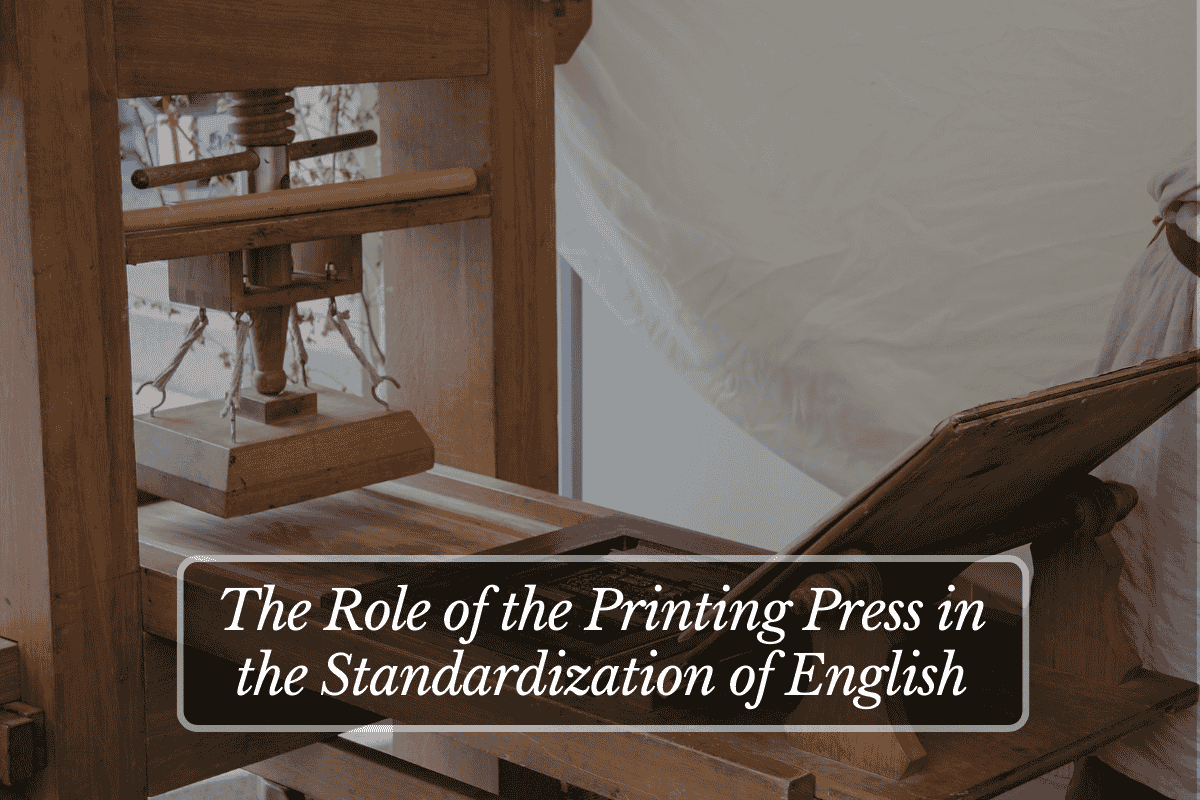
The printing press revolutionized English standardization by enabling mass production of texts, which fixed spellings, grammar, and punctuation into consistent forms, elevating the London ...