The birth of English in the Parliament is deeply tied to the historical development of the English Parliament itself, which evolved as a political institution from the 13th century onwards. The earliest recorded use of the term “parliament” in English crown documents dates back to November 1236 under Henry III.
Over the 14th century, with ongoing military and political crises, Parliament gained significant powers, including taxation consent and petition presentation rights, shaping its role as a representative institution. Early parliamentary proceedings and records were managed by royal clerks, and the assembly itself transitioned from merely a king’s advisory body to a high court of the realm.
The use of English in official government documents and communication also emerged around the mid-13th century, notably with the 1258 publication of official letters in Latin, French, and English to reach all the king’s subjects directly. This was a crucial step in establishing English as a language of government and, by extension, of parliamentary business.
The formal use of English in Parliament is part of the broader constitutional and legal evolution, including language provisions. While modern parliamentary proceedings can include multiple languages (depending on context and country), the English language’s rise in Parliament connects with its use in administrative and legal documents from medieval times and the political acknowledgment of Parliament as an essential institution in English governance.
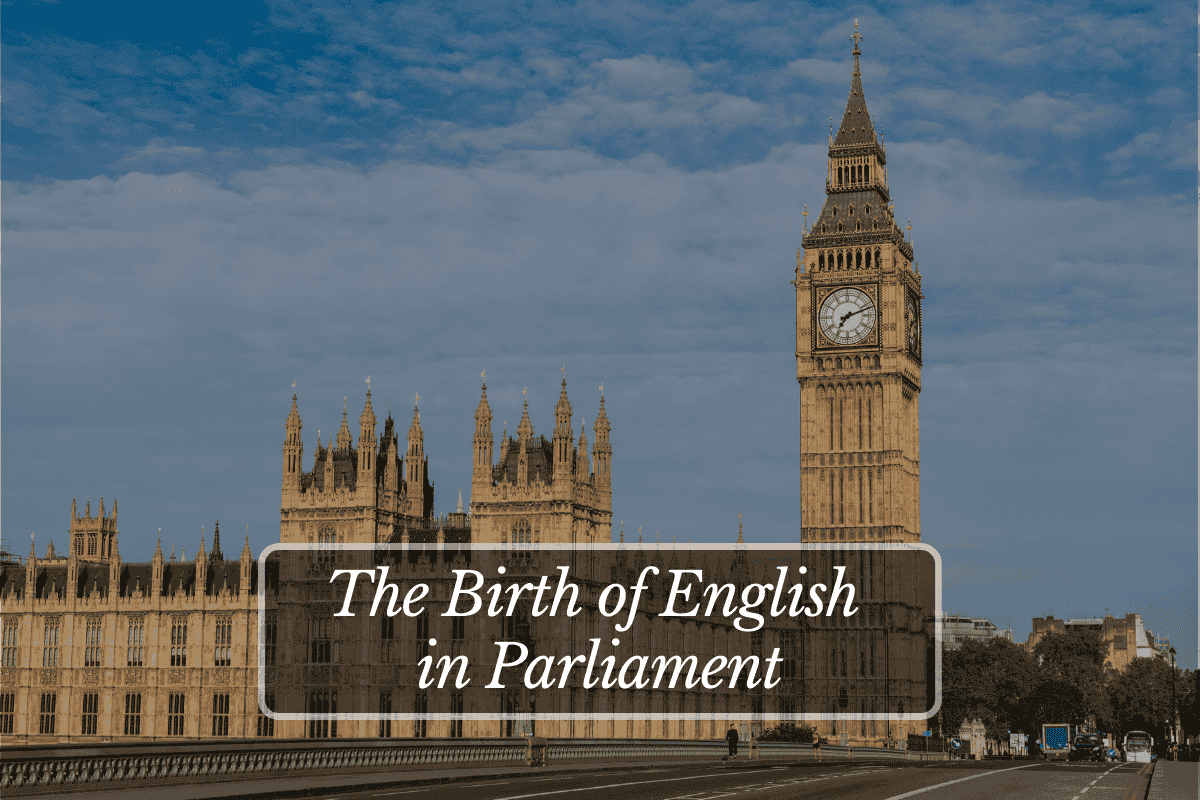
The Birth of English in Parliament
The English Parliament as an institution arose from medieval assemblies called by the monarch to discuss matters of governance. The term “parliament” itself was first officially recorded in 1236 during Henry III’s reign.
Over the course of the 14th century, Parliament’s authority expanded, especially concerning taxation and legislation, with membership representing counties and boroughs. The records and transcripts of parliamentary business were maintained by royal clerks in English (alongside Latin and French), reflecting English’s growing role. Key moments like Edward II’s deposition in Parliament in 1327 consolidated Parliament’s importance in constitutional matters.
Historical Use of English Language
English’s use in government records started to gain official status in the mid-13th century, with the 1258 issuance of official letters in English, alongside Latin and French, to communicate with all the king’s subjects.
This signaled English’s gradual acceptance as a language of governance and legal business, supplementing the traditional dominance of Latin and Anglo-Norman French. Over time, English became the natural language for parliamentary debates, orders, and records.
FAQs on English in Parliament
Q: When was the term “parliament” first used officially in England?
A: The term “parliament” was first officially recorded in 1236 under King Henry III.
Q: How did English become the language of Parliament?
A: English emerged gradually as a language of government starting with official letters in 1258, and as parliamentary proceedings and records adopted English alongside Latin and French.
Q: What role did Parliament play in medieval England?
A: Parliament evolved from an advisory council to a body with power over taxation, legislation, and petitions, becoming a central institution in English governance.
Q: Was English always the sole language used in Parliament?
A: No, earlier official documents and records were in Latin and Anglo-Norman French, with English gradually becoming prominent in the 13th and 14th centuries.
Q: What is the significance of the English language for Parliament today?
A: English remains the dominant language in the UK Parliament, reflecting its historic development as the language of governance and public discourse.