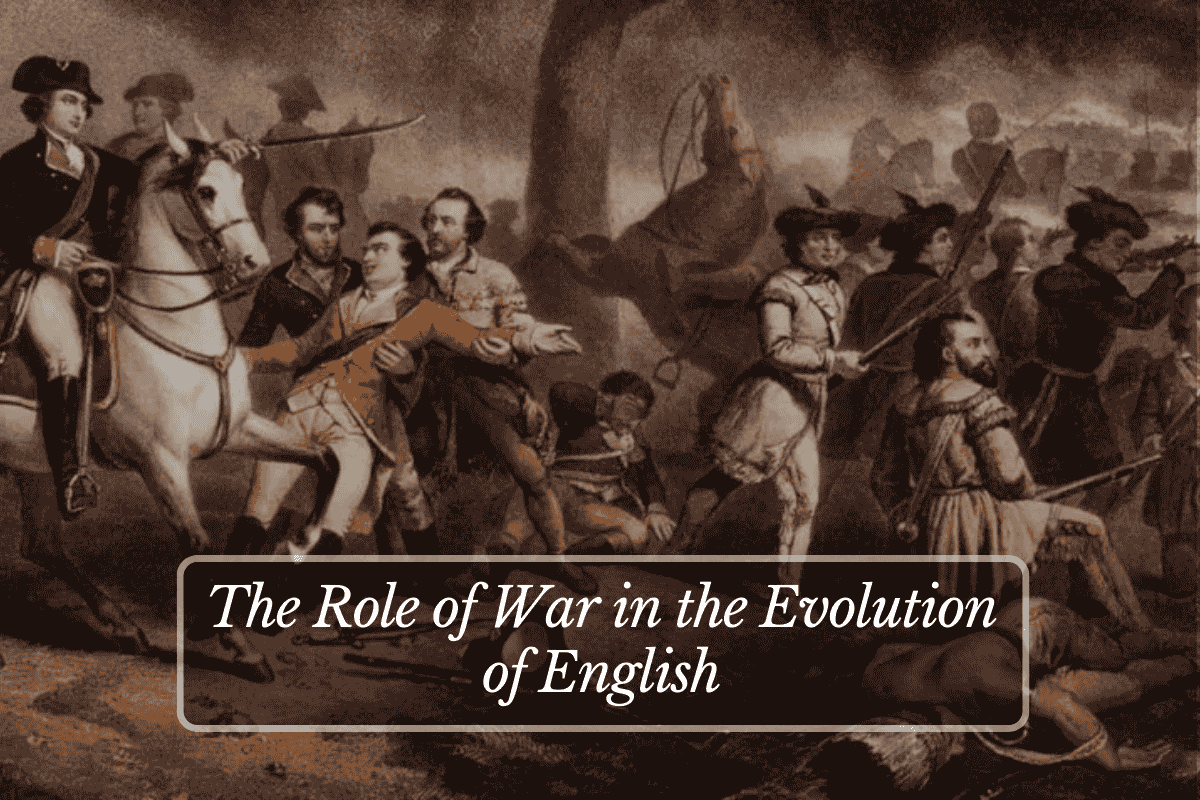
War has profoundly shaped the evolution of English, introducing vocabulary, altering grammar, and influencing syntax through invasions, conquests, and global conflicts. From Viking raids to the Norman Conquest and World Wars, military encounters forced linguistic borrowing, hybridity, and innovation, transforming a Germanic dialect into a global powerhouse.
Viking Invasions (8th-11th Centuries)
Norse raiders from Scandinavia invaded England repeatedly, settling in the Danelaw region and blending Old Norse with Old English. This contact yielded thousands of loanwords in everyday domains: sky, egg, leg, window, knife, they, their, and get. Norse pronouns (they, them, their) displaced Anglo-Saxon forms, while syntax simplified—verb placement and negation patterns shifted toward analytic structures. Place names like Grimsby and Derby endure as linguistic fossils of Viking impact.
Norman Conquest (1066)
William the Conqueror’s victory at Hastings imposed Norman French as the elite language for three centuries, relegating English to peasants. This created a bilingual society, bifurcating vocabulary: Anglo-Saxon words for animals (cow, pig, sheep) versus French-derived meats (beef, pork, mutton). Military and governance terms flooded in—army, battle, soldier, navy, siege, captain, prince, duke. Legal lexicon (justice, judge, court, felony) and abstract nouns (art, beauty, power) swelled English’s expressive range by 10,000 words. French softened consonants (knight from cniht), paving Middle English’s path.
Colonial Wars and Empire (16th-20th Centuries)
British military expansion absorbed terms from conquered regions: loot and thug (Hindi), bungalow (Hindi), arsenal and assassin (Arabic), tomahawk and moccasin (Native American). These reflect wartime cultural contact, enriching lexicon with exoticism and utility.
World Wars and Modern Conflicts
World War I birthed trench slang: no man’s land, shell shock (now PTSD), camouflage, blighty (home), toot sweet (tout de suite, “immediately”). World War II added acronyms like AWOL, jeep, and radar. Cold War and post-9/11 eras introduced drone, cyberwar, insurgency. War metaphors permeate idioms: battle lines, frontline, scorched earth.
Linguistic Legacy
Wars accelerated English’s hybridity, boosting vocabulary from 50,000 (Old English) to over 170,000 words today. They spurred simplification—loss of inflections, rise of analytic grammar—and global spread via empire and alliances. Yet tragedy birthed resilience: conflict metaphors frame discourse, from politics to sports.
FAQ
How did Vikings change English?
Introduced Norse words (sky, egg), pronouns (they), and simplified grammar via Danelaw contact.
What was the Norman Conquest’s biggest impact?
Injected 10,000 French words, especially military/legal; created class-based lexicon divides.
Why does war add so many words?
Contact between armies/languages forces borrowing for new concepts, tools, and experiences.
Did wars affect English grammar?
Yes, Norse/Norman influences reduced inflections, favored word order and prepositions.
How do modern wars influence English?
Through acronyms (AWOL, drone) and global slang, shaping tech/military lexicon.