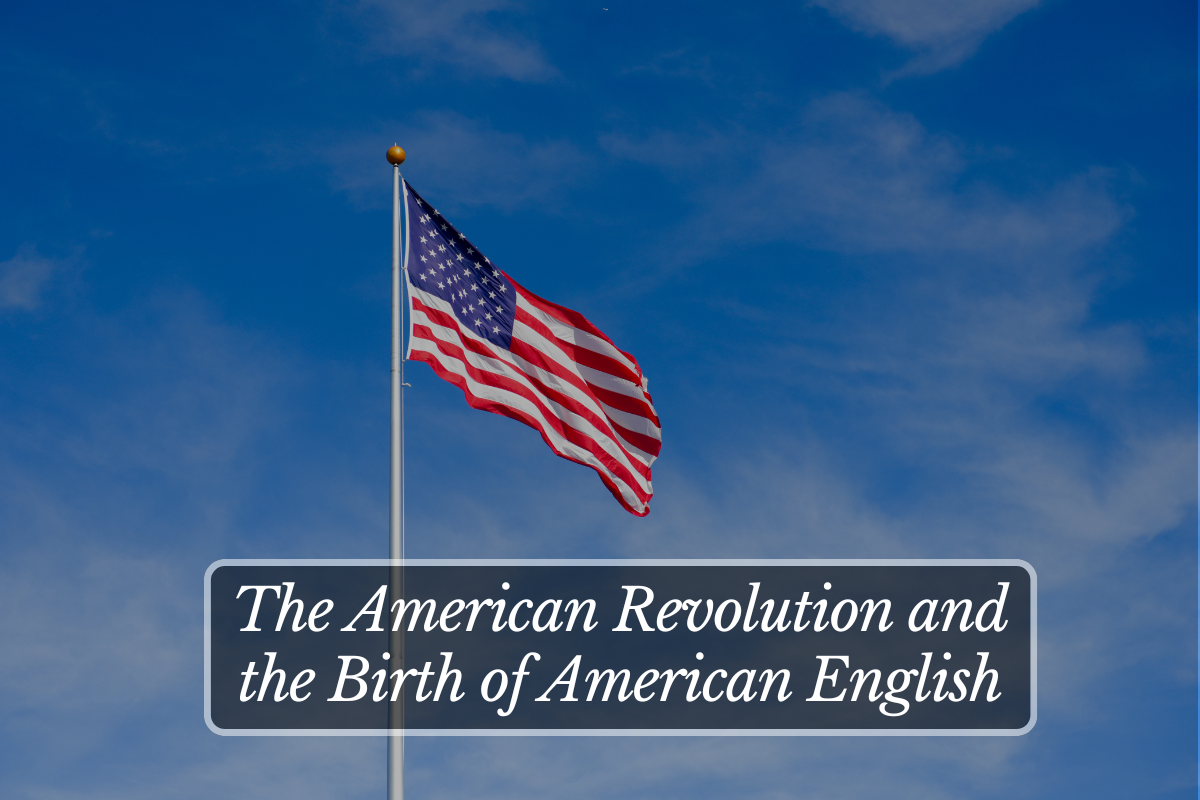
The American Revolution (1775–1783) not only shaped the political future of the United States but also played a significant role in the development of American English. As the American colonies sought independence from Britain, linguistic identity became an important aspect of creating a distinct national culture.
Colonial English Before the Revolution
Before the revolution, the English spoken in the American colonies was largely influenced by British norms but was already evolving independently. Diverse settlers from England, Scotland, Ireland, and other European countries brought their regional dialects and accents. Over time, these blended with the speech of Indigenous peoples and enslaved Africans, giving early colonial English a distinct flavor.
Language and National Identity
During and after the revolution, Americans wanted to assert cultural independence, including through language. Writers and leaders promoted spelling reforms and vocabulary choices that distanced American usage from British English. For example, Noah Webster famously championed simplified spelling and Americanized words to foster a unique American linguistic identity.
Vocabulary Changes and Innovations
Many words and phrases emerged or gained popularity during this period to reflect new political realities, social institutions, and inventions. Terms like “patriot,” “Continental Congress,” and “liberty” became part of everyday language, symbolizing American values. At the same time, some British English spellings were altered, such as “color” instead of “colour,” “center” rather than “centre,” and “defense” instead of “defence.”
Regional Dialects and Spread of American English
Following the revolution, the westward expansion and diverse immigrant waves further diversified American English. Regional dialects evolved, influenced by contact with Native American languages and immigrants from Germany, Italy, Ireland, and other countries. These dialects contributed to the rich linguistic tapestry of modern American English.
Lasting Impact on English Worldwide
The revolution set American English on its distinct linguistic path, which gained global prominence through political, economic, and cultural influence. Today, American English is one of the world’s leading varieties, with characteristic spelling, vocabulary, and pronunciation that trace their roots back to revolutionary times.
Frequently Asked Questions (FAQs)
Q1: How did the American Revolution influence American English spelling?
Leaders like Noah Webster promoted simplified, Americanized spellings to help establish a separate national identity.
Q2: Were there new words created during the revolutionary period?
Yes, terms related to liberty, government, and patriotism became popular, reflecting the new political landscape.
Q3: How did immigration affect American English after the revolution?
Waves of immigrants and contact with Native American languages diversified pronunciation and introduced new vocabulary.
Q4: Did American English differ much from British English immediately after the revolution?
Differences increased over time, with growing vocabulary, spelling reforms, and regional dialect development.
Q5: Why is American English influential globally today?
Its global spread is linked to the U.S.’s rising political, economic, and cultural power since the revolutionary era.