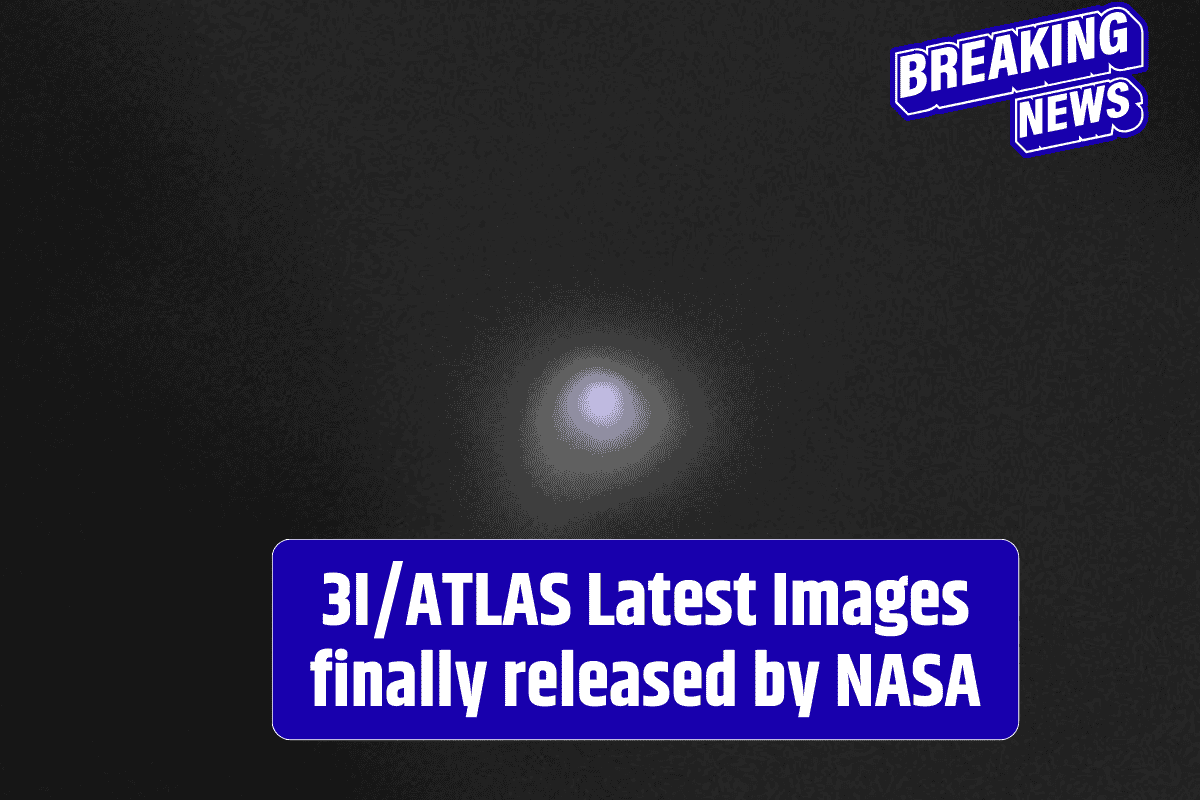
NASA is currently leading an ambitious, solar system-wide campaign to observe comet 3I/ATLAS the third known interstellar object to enter our solar system. With twelve different NASA spacecraft and telescopes already capturing imagery and data, and more observations on the way, this mission offers a once-in-a-generation opportunity to study an object that formed far beyond our Sun.
Discovered on July 1, 2025, by the NASA-funded ATLAS telescope in Chile, comet 3I/ATLAS is providing scientists with a unique window into the building blocks of other solar systems.
Unlike home-grown comets, this one carries the signature of a completely different stellar environment, and by studying it from multiple vantage points, NASA hopes to learn how foreign planetary systems might differ from ours.
Observations from Mars: The Closest Look Yet
Some of the clearest and closest images of 3I/ATLAS have come from Mars, where three NASA missions captured rare views of the comet:
- Mars Reconnaissance Orbiter (MRO) snapped detailed imagery from just 19 million miles away.
- MAVEN (Mars Atmosphere and Volatile Evolution) used ultraviolet imaging to study the comet’s gas composition and particle activity.
- The Perseverance rover even managed to get a faint glimpse of the comet from the Martian surface, adding a ground-level perspective from another planet.
Sun-Watching Missions Track the Hidden Comet
When 3I/ATLAS passed behind the Sun (as seen from Earth), ground-based telescopes couldn’t track it. That’s where NASA’s heliophysics missions stepped in:
- STEREO observed the comet from Sept. 11 to Oct. 2, capturing its movement across solar-dominated skies.
- SOHO, operated jointly by NASA and ESA, monitored it between Oct. 15 and 26.
- PUNCH, launched earlier this year, offered some of the first images of the comet’s tail, taken between Sept. 20 and Oct. 3.
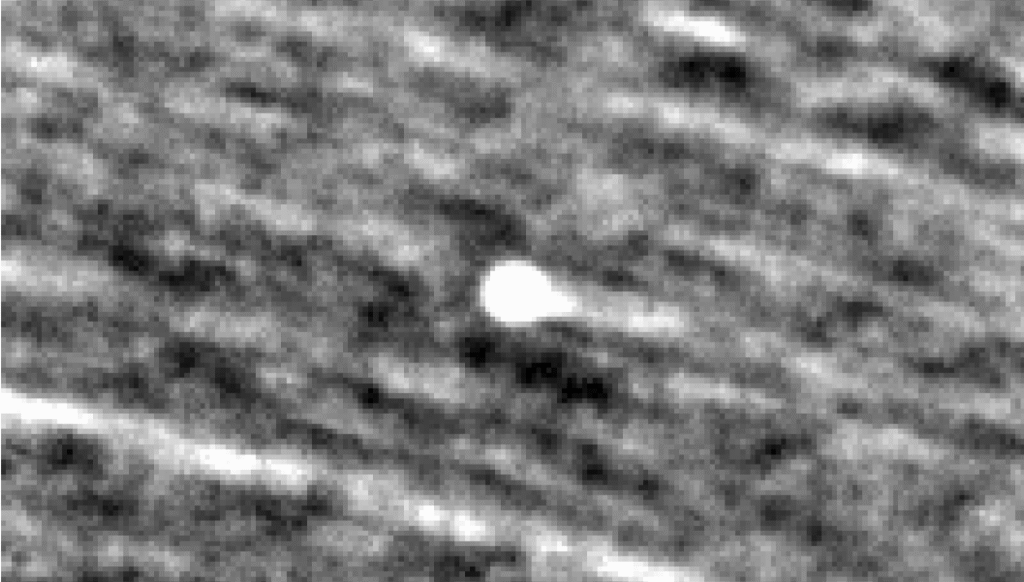
This marks the first time NASA’s heliophysics spacecraft have intentionally targeted and studied an object from outside our solar system.
Asteroid Missions Join the Effort
Two of NASA’s active asteroid explorers, currently en route to their own deep space missions, turned their instruments toward 3I/ATLAS during its approach:
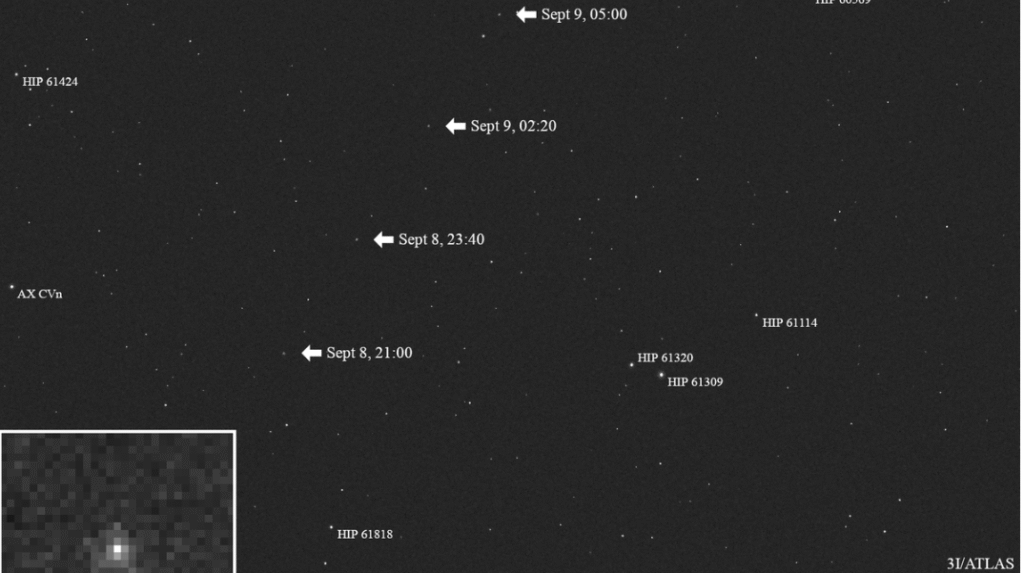
- On Sept. 8 and 9, the Psyche spacecraft recorded four observations over eight hours from 33 million miles away, helping scientists improve the accuracy of the comet’s projected path.
- On Sept. 16, Lucy, from a much farther distance of 240 million miles, captured multiple exposures. By stacking the images, researchers could analyze the structure of the comet’s coma and tail.

Deep Space Telescopes Offer Detailed Analysis
NASA’s most powerful space telescopes also joined the campaign:
- The James Webb Space Telescope (JWST), known for its infrared imaging power, captured data on the comet’s icy structure and dust.
- The Hubble Space Telescope, even after decades in orbit, still managed to deliver valuable optical imagery.
- SPHEREx, another space observatory focused on cosmic history, also caught the comet in August 2025, contributing spectral data that helps identify the chemical makeup of the object.
What’s Next for 3I/ATLAS
The comet will make its closest approach to Earth on Friday, Dec. 19, coming within 170 million miles — nearly twice the Earth-Sun distance. After that, it will continue moving through the solar system and is expected to pass the orbit of Jupiter by spring 2026.
NASA will continue to track 3I/ATLAS as it exits our solar system, collecting every last bit of data before this once-in-a-lifetime visitor returns to deep interstellar space.
FAQ Section
Q1: What is comet 3I/ATLAS?
3I/ATLAS is the third confirmed interstellar object to pass through our solar system, discovered on July 1, 2025. It originated from outside the Sun’s gravitational reach.
Q2: How is NASA observing 3I/ATLAS?
NASA is using 12 spacecraft, including Mars orbiters, deep space probes, solar observatories, and space telescopes like Webb and Hubble.
Q3: Why is 3I/ATLAS important to study?
Studying this interstellar comet helps scientists understand the composition of other solar systems and how they differ from our own.
Q4: When will 3I/ATLAS be closest to Earth?
The comet will be closest to Earth on Dec. 19, 2025, at a distance of 170 million miles.
Q5: Will 3I/ATLAS return to our solar system?
No. Like other interstellar comets, 3I/ATLAS is on a one-time pass and will leave the solar system after 2026.