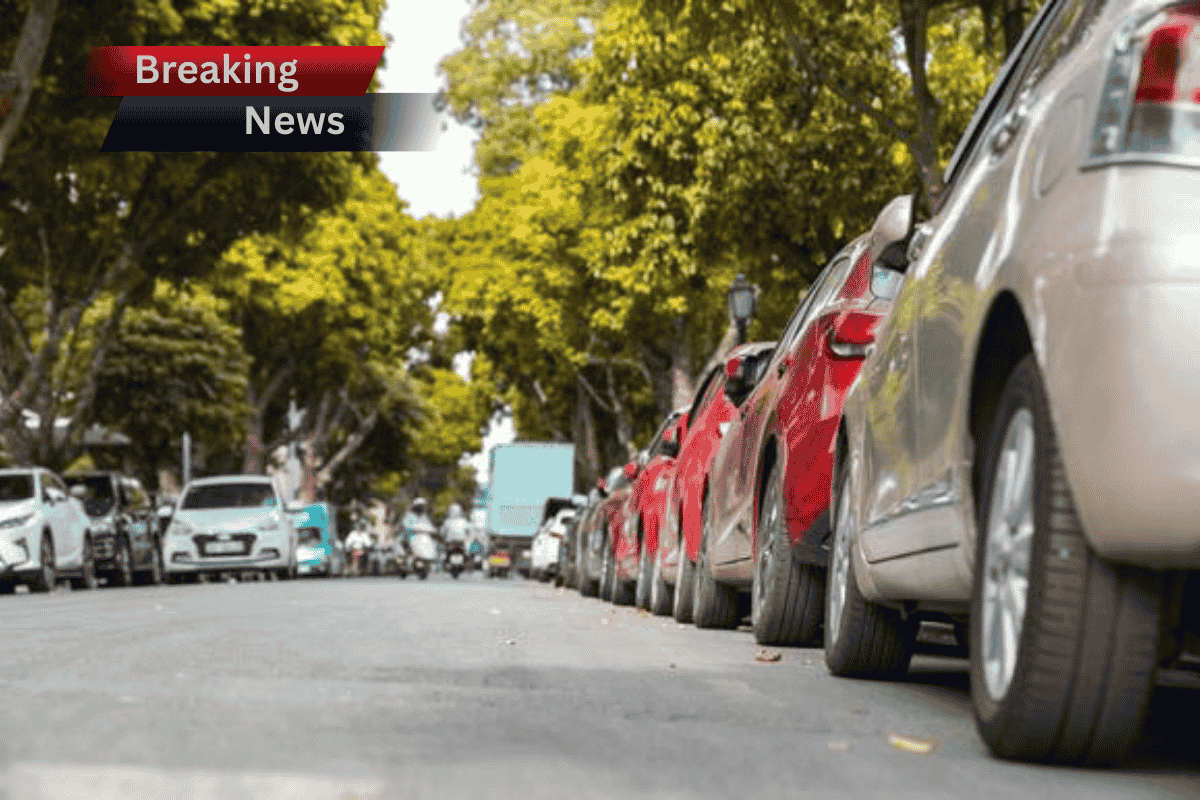
Holiday season in California always has a certain rhythm to it — families flying in, kitchens working overtime, the annual tug-of-war over who’s carving the turkey, and yes, the eternal battle for parking. If you’ve ever circled a neighborhood in L.A. for forty minutes or tried squeezing into a tight Bay Area cul-de-sac before kickoff, you know how quickly parking can become a full-scale holiday crisis. And with guests arriving from out of town, neighbors get twitchy, driveways get blocked, and suddenly someone’s calling the non-emergency line.
California’s parking and driving rules might not be festive, but knowing them can save you a hefty fine — or a tow truck fee that wipes out your holiday shopping budget. So here’s what state law really says about where you can park, how long you can leave your car in front of someone’s house, and what kind of penalties you could face if you push your luck.
Where Parking Is Flat-Out Illegal in California
California’s Vehicle Code is surprisingly strict once you actually skim through it, and the holiday season doesn’t give anyone a pass. According to the state’s rules — spelled out by the Department of Motor Vehicles and enforced through local police — these are the no-go zones:
- Anywhere with a posted “No Parking” sign
- On marked or unmarked crosswalks
- On sidewalks, or even partially blocking a driveway
- Within 3 feet of a sidewalk ramp for disabled access
- In front of a curb cut designed for wheelchairs
- In the striped diagonal lines next to a disabled parking space
- In spaces reserved for zero-emission vehicles unless you’re actually driving one
- Inside tunnels or on bridges, unless signage explicitly allows parking
- Within 15 feet of a fire hydrant or fire station driveway
- Between a safety zone and the curb
- Double-parked, even “just for a second”
And the big one for holiday travel: no stopping on freeways unless it’s an emergency. The DMV is pretty blunt about it on its official site (https://www.dmv.ca.gov): if your car is on a freeway shoulder for more than four hours, it can and will be removed.
Meaning towed.
Meaning expensive.
The 20-Foot Rule: California’s New Crosswalk Parking Law
In January, a major statewide change quietly took effect. Assembly Bill 413 — California’s new “daylighting law” — says drivers cannot park within 20 feet of a crosswalk, whether or not it’s painted.
If the crosswalk includes a curb extension (those bulb-out sidewalks common in pedestrian-heavy areas), the limit shrinks to 15 feet. And cities are allowed to set their own distances for commercial loading areas, but the 20-foot rule is now the default across the state.
The logic is simple: removing cars from corners gives drivers and pedestrians better visibility — a point emphasized repeatedly in legislative analysis and local transportation reports.
Expect more curb paint, more enforcement, and more disputes between frustrated drivers and neighbors who suddenly find their usual parking spots off-limits.
Parking in Front of Someone’s House: What California Actually Allows
Here’s the question everyone asks during the holidays: “Can someone legally park in front of my house?”
Yes — as long as they’re not blocking the driveway.
Under state law, the curb in front of your home is public property, not private. The DMV has said this repeatedly, including in guidance shared with outlets like The Sacramento Bee: residents don’t “own” the street in front of their home.
But that doesn’t mean cars can stay there forever. California has a statewide time limit:
You cannot leave a car in the same spot on a public street for more than 72 hours.
After three days, a vehicle may be cited and ultimately towed as abandoned, even if it is functioning, registered, and legally parked otherwise. Cities enforce this rule aggressively during the holidays when street space is tight and complaints spike.
If a car overstays its welcome, homeowners have the right to report it to local law enforcement for a tag-and-tow process.
Parking Tickets in California: How Much You’ll Pay
Every year, the Judicial Council of California publishes its Uniform Bail and Penalty Schedule — the document courts and officers use to calculate fines and fees (https://www.courts.ca.gov). The base fine is just the first step; penalty assessments can stack like Jenga blocks.
Here’s a snapshot of common parking violations:
| Violation | Base Fine | Typical Total After Fees |
|---|---|---|
| Bus loading zone | $250 | ~$1,105 |
| Blocking 72-hour limit | $35 | ~$238 |
| Within 15 ft of a hydrant | $100 | ~$490–$550 depending on county |
| Disabled space violation | $250 | Often $1,100+ |
Bus loading zones are shockingly expensive — far more than many people expect — and disabled-parking violations remain among the highest fines in the state.
Why Enforcement Spikes Around the Holidays
Police departments across California consistently report increased calls related to:
- Vehicles blocking driveways
- Cars parked too close to corners
- Long-term parking by visiting relatives
- Cars left unmoved during extended travel
- Streets clogged during holiday events or football games
Many municipalities switch into more active enforcement from Thanksgiving through New Year’s because streets are crowded, and walkability and emergency access matter more when gatherings are frequent.
And while some people assume holiday generosity extends to parking: it does not.
Tips to Avoid Getting Towed This Season
A few practical rules can keep you out of trouble:
- Move your car every two to three days, even in a residential area.
- Avoid corners — the 20-foot rule is now statewide.
- Don’t rely on “No one will notice.” People notice.
- Make sure guests understand time limits before parking.
- If traveling, ask a neighbor to shift your car occasionally.
- When dealing with street sweeping, always check local apps or city calendars.
Parking rules vary between cities — San Francisco and L.A., for example, have entire chapters of municipal code dedicated to street use — but state law applies everywhere.
Fact Check
All legal information in this article is sourced from the California Vehicle Code, Assembly Bill 413 (officially enacted January 2024), the California DMV’s published parking regulations, and the Judicial Council of California’s 2025 Uniform Bail and Penalty Schedule. No details have been drawn from unofficial guides, private blogs, or third-party summaries. Additional cross-references include guidance from the DMV’s official website and state legislative records.
FAQs
1. Can I have a car towed immediately if it’s in front of my home?
Not unless it blocks a driveway or fire access. Otherwise, it must violate the 72-hour rule.
2. Does the 20-foot crosswalk rule apply to unpainted corners?
Yes. Even unmarked crosswalks are covered under AB 413.
3. Can someone park in front of my house indefinitely if they move the car slightly?
Technically, the vehicle must change location — not just inch forward — but enforcement varies by city.
4. Are towing fees standardized statewide?
No. Tow and storage costs vary, but they often exceed $300–$500 for a single incident.
5. Does California ever suspend parking rules during holidays?
Some cities relax street sweeping, but state parking laws — hydrants, crosswalks, disabled zones — remain fully enforceable.