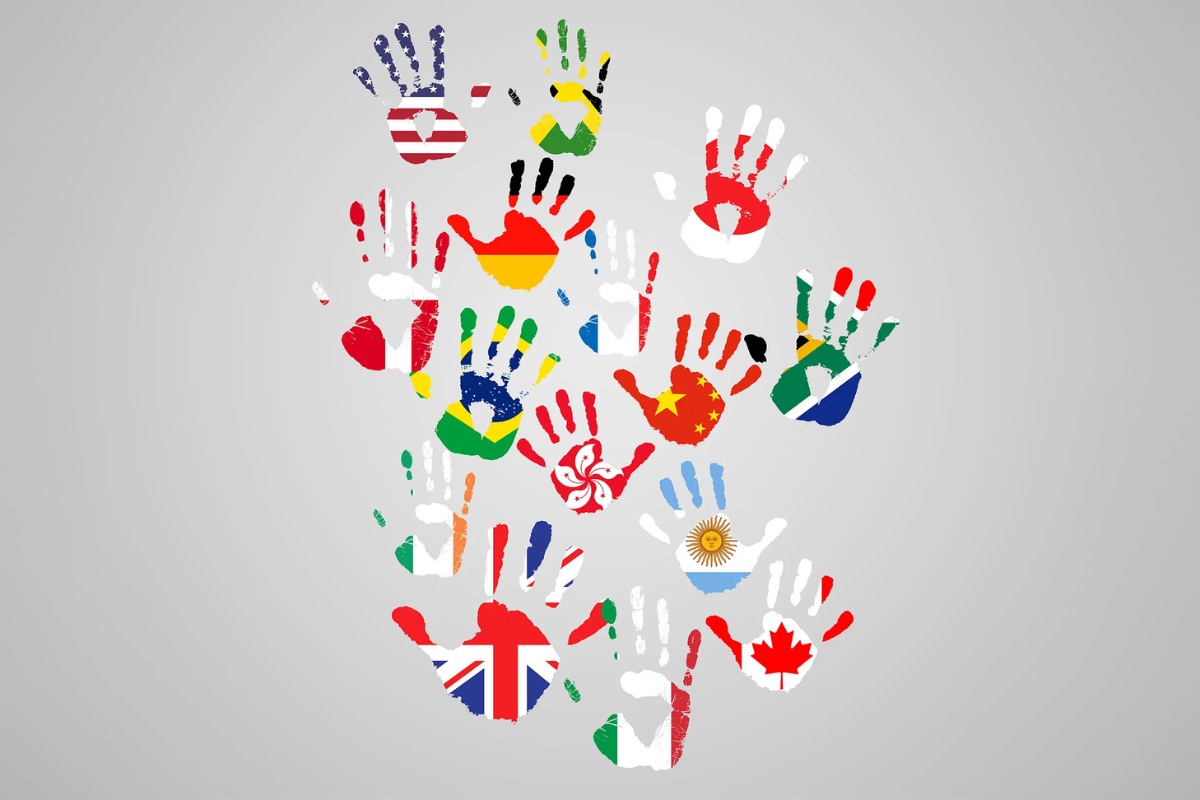
English as a global identity has become a powerful symbol connecting millions of people worldwide beyond national and cultural boundaries. Learning and using English often provides access to global culture, education, and economic opportunities, influencing personal and collective identities.
While English facilitates communication and shared understanding across diverse groups, it also raises important questions about cultural preservation and the balance between adopting a global identity and maintaining local linguistic and cultural heritage.
English has become intertwined with global media, technology, diplomacy, and business, contributing to a sense of belonging to a worldwide community. At the same time, scholars and cultural critics highlight the need to respect and support linguistic diversity to avoid cultural homogenization or loss of minority languages.
Many argue that English can function as a bridge language, connecting people, while enriching identity if embraced alongside one’s first language and culture.
English as a Global Identity
- English enables global communication, education, and economic mobility, becoming a key marker of global identity for millions worldwide.
- It fosters cross-cultural communication, helping people from diverse backgrounds relate and collaborate internationally.
- The language intersects with cultural identity, influencing how individuals see themselves in a connected world, sometimes blending global and local identities.
- The global dominance of English presents challenges such as the potential loss of minority languages and cultural uniqueness, prompting advocacy for multilingualism alongside English.
- Many prominent writers and intellectuals use English to represent their cultures on international stages, demonstrating how English can carry diverse cultural voices.
FAQs on English and Global Identity
Q: How does English shape global identity?
A: English provides a shared means to participate in global culture, education, and economic opportunities, connecting people beyond their native cultures.
Q: Does English threaten local languages and cultures?
A: It can, by overshadowing minority languages and traditions, but balancing English with local languages can preserve cultural diversity.
Q: Can English represent diverse cultural identities?
A: Yes, many writers and communities use English to express their unique cultural perspectives internationally.
Q: Why is English considered a bridge language?
A: It facilitates communication among people who do not share a native language, promoting cooperation and understanding globally.
Q: How should societies balance English and cultural identity?
A: By promoting multilingualism and cultural education alongside English to ensure cultural heritage is maintained within a global context.