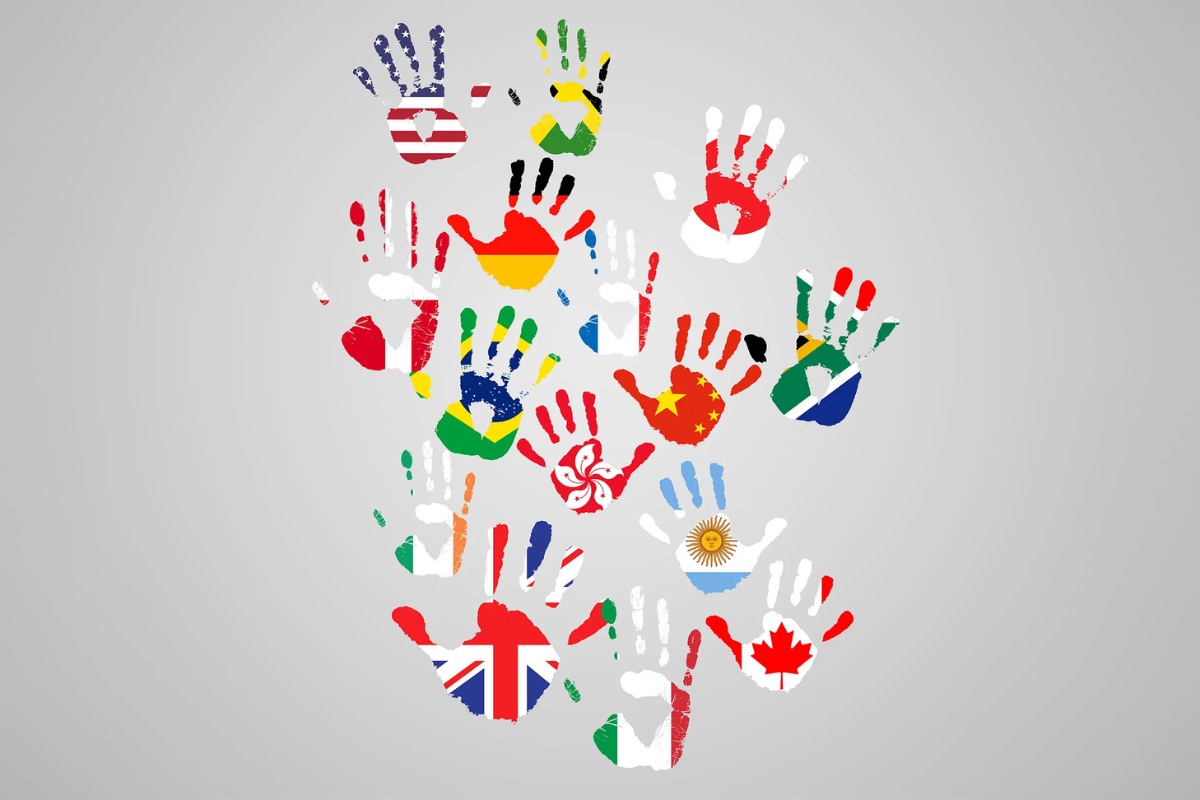
English mirrors humanity’s mosaic through vast loanwords, hybrid varieties, and cultural adaptations, absorbing over 60% of its lexicon from global sources to embody inclusivity. From French “ballet” and Arabic “algorithm” to Hindi “chai” and Japanese “kimono,” borrowings capture culinary, scientific, and artistic exchanges. World Englishes—diverse dialects shaped by local tongues—further showcase this, blending identities in Kachru’s circles while enabling cross-cultural dialogue.
Loanwords: Windows to Cultures
English evolved via conquest and trade, integrating Norman French post-1066 for cuisine (“fiesta,” “pajamas”) and Romance influences like “zeitgeist” from German. Asian contributions include “karaoke” (Japanese), “robot” (Czech via Slavic), enriching expression with precision absent in native stock. These terms signal cultural savvy, fostering empathy in multicultural talks.
Varieties: Local Flavors Worldwide
Inner circle Englishes (US, UK) diverge in spelling (“color” vs. “colour”) and slang, while outer circle hybrids like Indian English weave Hindi (“prepone”) and retroflex sounds, Hinglish code-switches freely. Singlish fuses Malay/Chinese/Tamil for brevity, Multicultural London English borrows Caribbean “mandem” and “bare”. Australian adds “arvo,” Nigerian Pidgin Yoruba rhythms—each reflecting colonial legacies and modern migrations.
These forms prioritize intelligibility over “standard” norms, empowering speakers to assert heritage.
Cultural and Social Mirrors
Global Englishes challenge native dominance, validating non-standard syntax in literature and media for authentic voices. They promote hybridity, as in pidgins/creoles from contact zones, enhancing cognitive flexibility and economic ties. Digital platforms accelerate evolution, blending varieties for inclusive global narratives.
This diversity underscores English’s adaptability, turning a colonial tongue into a democratic force.
FAQ
What are loanwords in English?
Borrowed terms from other languages like raison d’être (French) or “sushi” (Japanese), adding cultural depth.
How do World Englishes show diversity?
Localized dialects like Singlish or Hinglish mix English with native elements, reflecting regional identities.
Why does English borrow so many words?
Historical trade, empire, and globalization introduce concepts needing precise adoption.
What is Multicultural London English?
A hybrid dialect blending Cockney with Caribbean/Jamaican influences like “mandem”.
How does this diversity benefit communication?
It builds mutual understanding, cultural awareness, and inclusive global exchange.