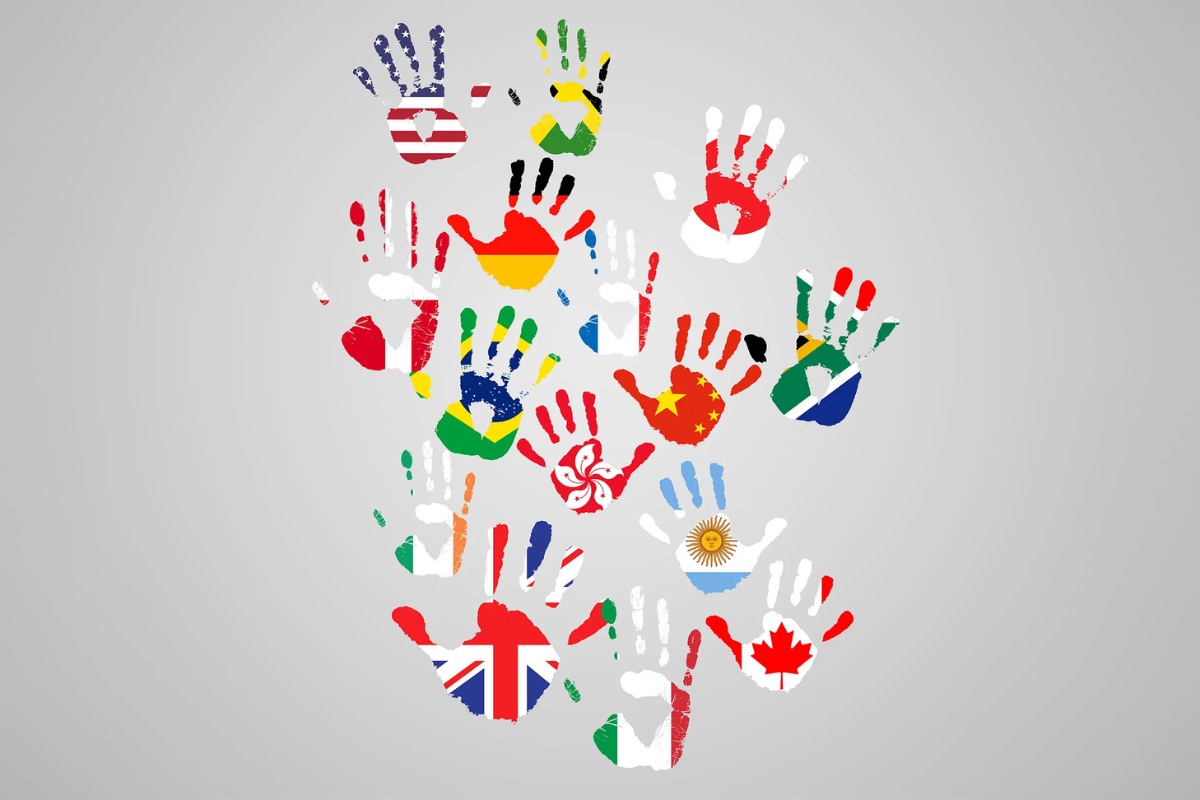
English serves as a global lingua franca in a multicultural world, enabling communication across diverse linguistic groups in business, diplomacy, education, and culture while fostering unity amid growing interconnectedness. With over 1.5 billion speakers, it bridges gaps but also raises concerns about linguistic equity and cultural preservation.
English as a Bridge for Global Interaction
English facilitates seamless exchanges in international settings, from trade negotiations to scientific collaborations, allowing non-native speakers to connect without shared mother tongues. Its dominance stems from British colonialism and U.S. cultural influence, making it the primary language of the internet, aviation, and academia. This role promotes cultural sharing, such as through films, music, and literature, enriching global understanding.
Economic and Educational Advantages
Proficiency in English unlocks job opportunities in multinational firms and access to vast resources like research journals and online courses. It drives economic growth by simplifying global transactions and supports education in multilingual societies by providing a common medium. In diverse classrooms, it aids integration while preserving local identities when balanced with native languages.
Challenges in a Multicultural Context
English’s prevalence can lead to linguistic inequality, where non-speakers face barriers in employment or information access, exacerbating socioeconomic divides. Cultural homogenization risks eroding minority languages and traditions, as seen in regions prioritizing English in schools over indigenous tongues. Educational disparities arise when resources favor English, sidelining local dialects.
Balancing Dominance with Inclusivity
- Promote multilingualism alongside English to safeguard diversity and cognitive benefits like enhanced problem-solving.
- Use translation tools and ELF (English as a Lingua Franca) adaptations for equitable communication.
- Encourage hybrid approaches in education, integrating local languages with English for cultural relevance.
- Foster awareness of biases to mitigate imperialism and support minority language revitalization.
FAQ
Q1: Why has English become the dominant global language?
Historical factors like British colonialism and U.S. influence post-WWII, combined with its use in technology and trade, established it as a lingua franca.
Q2: What economic benefits does English provide in multicultural settings?
It opens doors to international jobs, trade, and markets, boosting opportunities for proficient speakers worldwide.
Q3: How does English impact cultural diversity?
It enables exchange but risks homogenizing cultures by overshadowing local languages if not balanced carefully.
Q4: Can English coexist with multilingualism effectively?
Yes, through policies supporting multiple languages in education and media to preserve identities while leveraging English’s utility.
Q5: What challenges do non-native speakers face with English dominance?
Access barriers, educational gaps, and cultural erosion, often widening inequalities in global participation.