
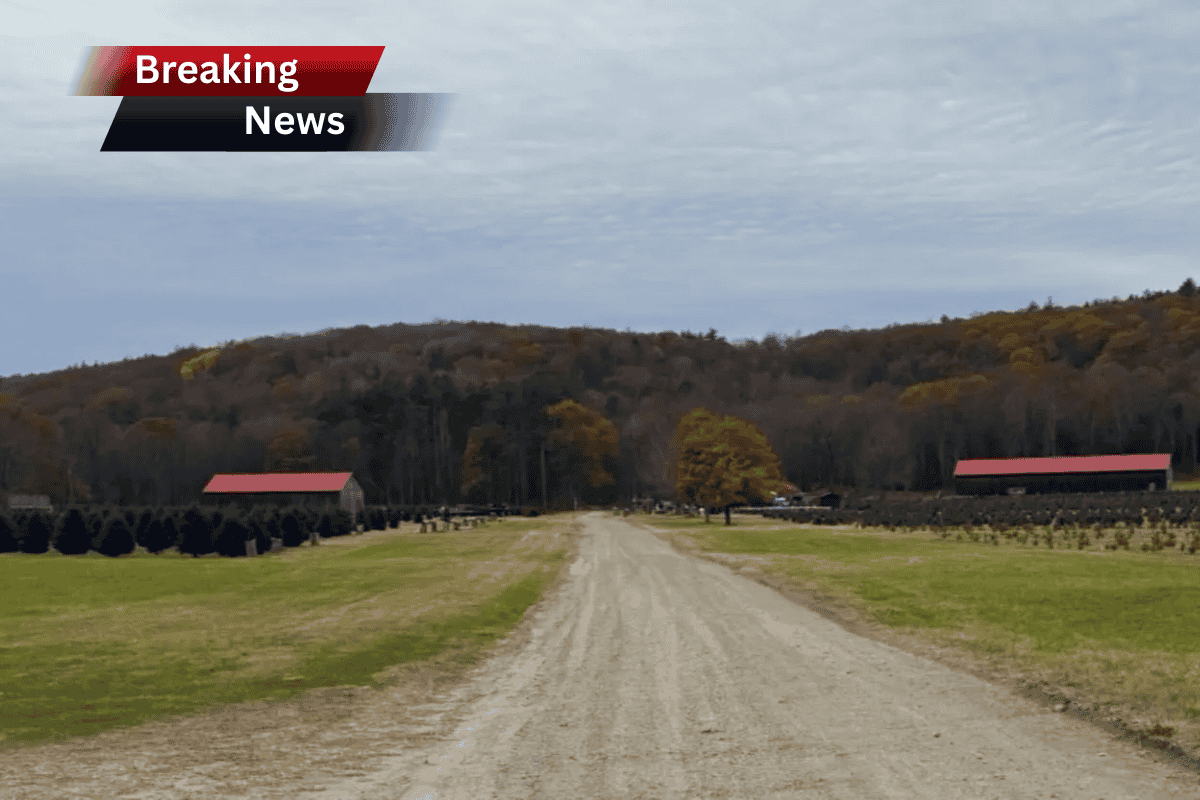
By the time most people hit their early 70s, they’re talking about downsizing, warm winters, maybe a quiet hobby if ambition still flickers. Bob Schrader went the other direction. After nearly four decades at UMass Cooperative Extension — a front-row seat to the economics and science of farming — Schrader bought 133 acres of overgrown land and decided to turn it into a functioning Christmas tree farm. Not because it was easy. Because it was worth doing.
The Unexpected Economics of a Christmas Tree Farm
The land in Hatfield, Massachusetts wasn’t some postcard-perfect patch when Schrader bought it in 2010 for $215,000. The place hadn’t been operational for nearly a decade — weeds everywhere, rows lost, infrastructure tired. But Schrader, now 72, knew enough about farmland to understand a bargain when he saw one. And with his son Jake, then fresh out of UMass Amherst with a degree in plant soil science, he started rebuilding Chestnut Mountain Christmas Tree Farm from the ground up.
The father-son dynamic isn’t sentimental fluff here — it’s infrastructure. Jake handles maintenance, repairs, the hands-in-the-soil labor that keeps 133 acres running. Bob handles the books, zoning, compliance, scheduling, the “paper farming” every real farmer jokes about. Both say the same thing: neither could do it without the other. And honestly, that’s the unspoken business model for family farms across New England.
Growing a Christmas Tree Takes Eleven Years — and That’s If Things Go Right
There’s a casual assumption among customers that Christmas trees are basically money growing on stems. Bob hears it all the time: “You plant a $3 tree and sell it eight years later for $75 — must be a great gig.” He laughs politely, because the gap between perception and reality is enormous.
Here’s the actual math:
| Stage | Time Required | Cost/Details |
|---|---|---|
| Seedling purchase | Annual | ~6,000 fir seedlings at ~$2 each |
| Planting | 2 days each spring | Requires equipment + labor |
| Growth + shaping | 7–9 years | Fertilizing, mowing, herbicides, shearing, topping |
| Replanting after harvest | 2–3 years | Clearing, soil prep, layout |
A Christmas tree is effectively an 11-year financial cycle. Weather can break it. Fungus can break it. Drought can break it. Equipment can break it. And the price of diesel, fertilizer, and labor — well, you’ve seen the last two years.
Thanksgiving Weekend: When a Year’s Work Turns Into Three Chaotic Days
Chestnut Mountain sells roughly 2,500 trees a year, and about one-third of those sales happen over Thanksgiving weekend. That’s when the parking area fills up with SUVs and the farm transforms into something out of a Hallmark holiday script — saws and wheelbarrows for customers, bonfires, horse-drawn wagon rides for $2, free hot chocolate, families posing for photos they’ll use on next year’s Christmas cards.
Trees run $75 to $90 depending on height. Every single tree gets processed — shaken, baled, trimmed, leveled — a surprisingly physical assembly line powered each season by a dozen helpers made up of friends, family, and part-time workers.
Around mid-November, the Schraders convert an outbuilding into a gift shop selling wreaths, crafts, stands, and ornaments from local artisans. About 5,000 people wander through it each season. These extras aren’t cheap — just the horse and wagon cost about $400 a day — but Bob calls it agrotourism, and he’s right. In New England, where wholesale crop margins have been shrinking for years, farms have been forced to morph into “experiences” to stay alive.
So… Is It Profitable?
It is — cautiously. After equipment, labor, and operating costs, the farm typically nets $50,000 to $100,000 a year. Both Bob and Jake emphasize that neither takes a salary from the business. The farm is structured as an LLC, and profits go straight back into operations, upgrades, land improvements, and the next rotation of seedlings.
They also supplement revenue with about 5,000 bales of hay, a small maple syrup operation (roughly 25 gallons a year), and firewood. Small-scale agricultural diversification — honestly, the most textbook New England farm survival strategy there is.
Climate Change: The Threat You Can’t Fend Off With a Chainsaw
Talk to any farmer and eventually the conversation shifts to weather. Schrader doesn’t mince words: even minor climate shifts have major consequences for tree growth cycles.
This year’s challenge? A particularly rainy spring has triggered an outbreak of phytophthora — a waterborne fungus that destroys roots. Once a tree’s roots get hit, it’s gone in three months. The farm has already lost several hundred young trees. Bob is working with UMass and the Connecticut Agricultural Experiment Station to figure out a playbook, but even he admits the landscape is becoming less predictable.
Jake jokes that farmers are “the biggest gamblers in the world.” He’s not wrong. Farming is a long-term bet with short-term threats.
Legacy and the Long Arc of a Family Business
Jake, now 39, still holds a full-time job with Berkshire Gas and clocks farm hours before sunrise, after dark, on weekends, and on vacation days. It’s an exhausting schedule, but he talks about the work with a kind of grounded pride — the kind you don’t fake.
Bob, meanwhile, knows he won’t be able to run the farm forever. He hopes Jake will eventually take over full-time. And Jake, for his part, calls his father both his best friend and business partner — a rare thing in any industry, rarer still in one as demanding as agriculture.
Fifteen years in, the Schraders aren’t just running a Christmas tree farm. They’re running an intergenerational project — one that survives on equal parts labor, luck, grit, and sentiment.
Fact Check
All details in this article are supported by publicly available interviews and reporting on the Schrader family farm, UMass Extension agricultural information, USDA crop cycle standards, and regional agrotourism trends. Christmas tree growth timelines (7–11 years), typical pricing, and climate-related risks are consistent with data published by the National Christmas Tree Association (https://realchristmastrees.org) and New England agricultural research centers.
FAQs
1. How long does it take to grow a market-ready Christmas tree?
Typically 7–11 years, depending on species, climate, and maintenance.
2. Are Christmas tree farms profitable?
Profitability varies but can be solid with agrotourism and diversified income streams. Chestnut Mountain nets roughly $50k–$100k annually.
3. Why are Christmas trees so expensive?
Long growth cycles, high land and labor costs, climate pressures, and seasonal demand all push prices upward.
4. What are the biggest threats to Christmas tree farms?
Weather volatility, fungal diseases like phytophthora, rising input costs, and labor shortages.
5. Can customers really cut their own trees?
Yes — many New England farms, including Chestnut Mountain, offer choose-and-cut experiences with saws and help on site.













Was scammed trying to buy 2 e-bikes.
This is really bad
Why is really badly
about time us citizens that got screwed all our lives working paying taxes and then got taxed again when we went shopping everything goes up every year but our pay checks didn’t know i am retired and i am getting screwed again by the government were is all this money trump is talking about i haven’t seen one Penny
I ain’t seen nothing either